Table of Contents
What Is a Snowman and How Do You Build One? – A snowman is a figure made by packing and stacking snow into a human-like shape, usually three rounded sections that get smaller from bottom to top. People in the United States build them every winter after a good snowfall as a classic outdoor activity for kids and families. This page explains what a snowman is, shares a simple history, walks through practical building steps, and points you to legitimate free printable snowman templates for crafts, coloring, or indoor fun when real snow is not available.
What Is a Snowman?
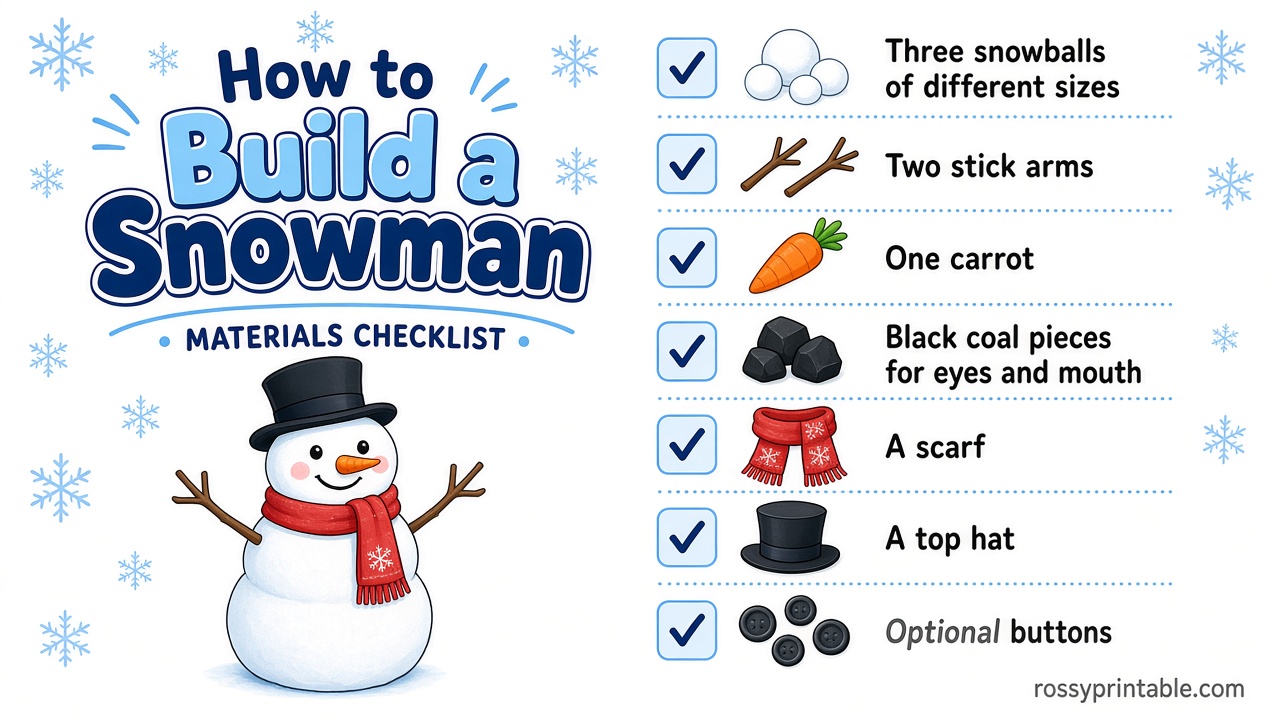
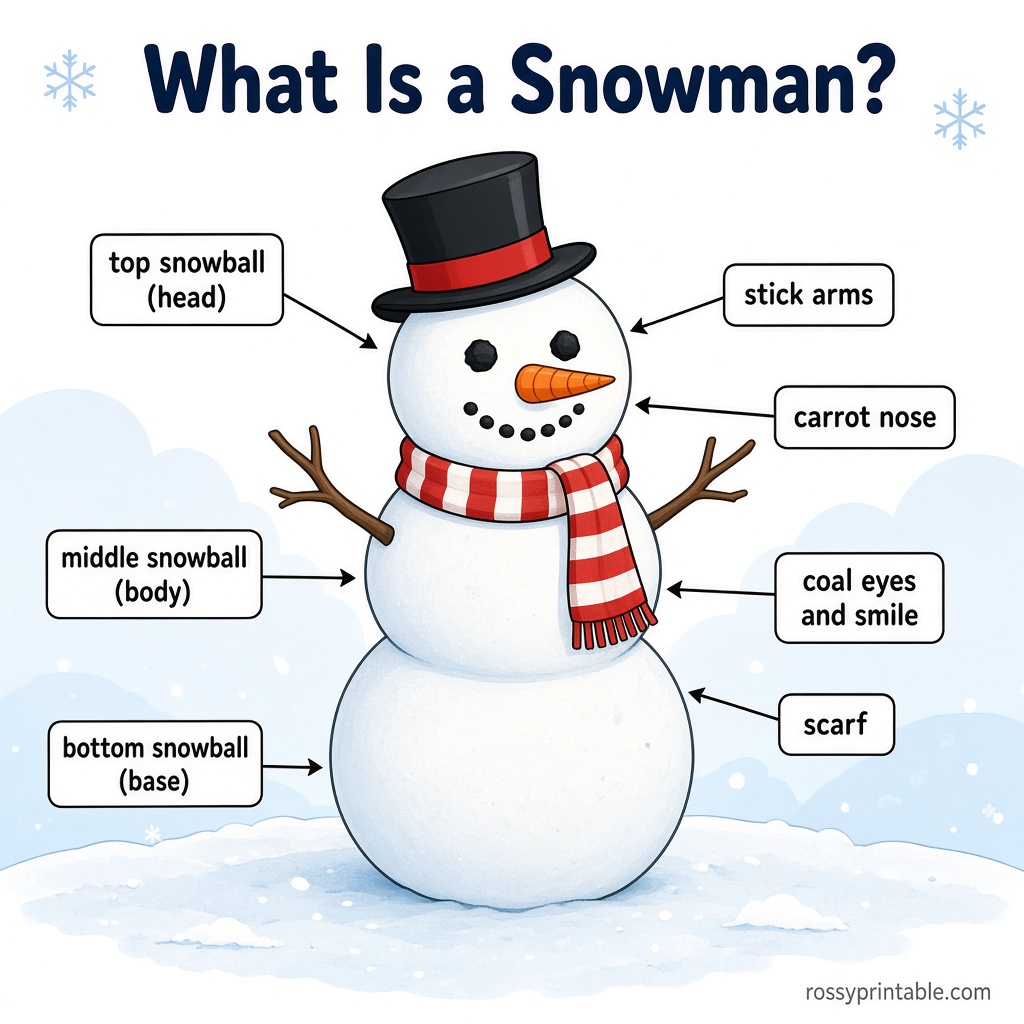
A snowman is snow shaped into a standing figure that looks roughly human. The classic American version has three snowballs: a large base, a medium middle section, and a smaller head. Decorations traditionally include a carrot nose, stick arms, coal or button eyes and mouth, a scarf, and a hat.
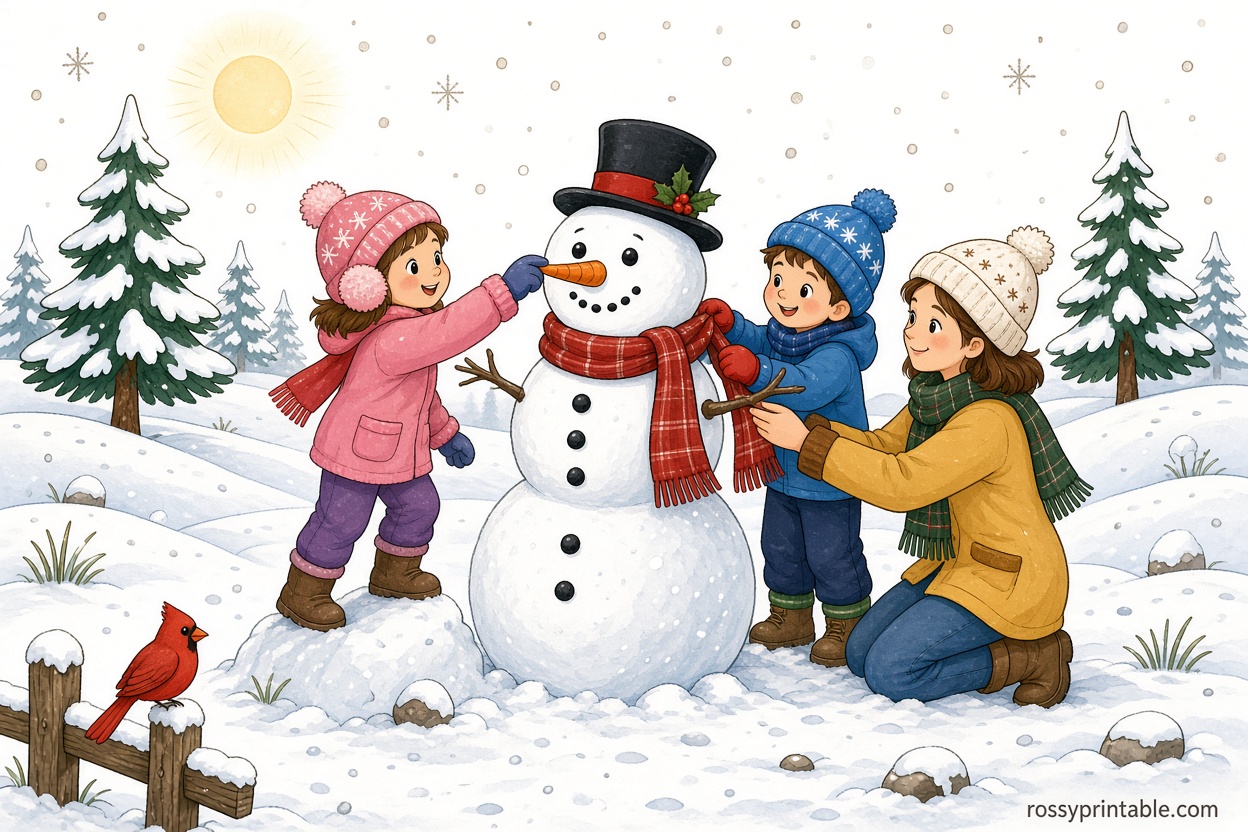
Snowmen appear in American culture through songs like “Frosty the Snowman,” children’s books, holiday decorations, and winter yard displays. They turn an ordinary snow day into creative play and give families an easy way to enjoy cold weather together.
A Brief History of the Snowman
Snow figures have been made for centuries wherever snow falls. The earliest known depiction appears in a 1380 illuminated manuscript (a Book of Hours) held in the Netherlands. In the Middle Ages and Renaissance, people built snowmen for entertainment, community events, and even political commentary—such as the large display of snow figures created in Brussels in 1511.
Author Bob Eckstein, who researched the subject extensively for his book The History of the Snowman, notes that snowmen have long served as temporary folk art. In the United States the image became especially popular in the 20th century through songs, cartoons, and holiday traditions. The three-ball style with carrot nose and top hat is the version most familiar today.
How to Build a Snowman: Step-by-Step Guide?
Success depends on the right snow and a few simple techniques. Follow these practical steps used by experienced builders.
1. Check the Snow
Scoop a handful and press it. Ideal snow is moist and sticky (sometimes called “packing snow”). Powdery, dry snow or very wet slush will not hold shape well. If the snow is too dry, a light mist of water can help in some cases, but waiting for better conditions is usually smarter.
2. Choose a Flat Spot
Pick a level area that gets some shade if possible. Direct sun melts snowmen faster. Clear a space so you have room to roll large balls.
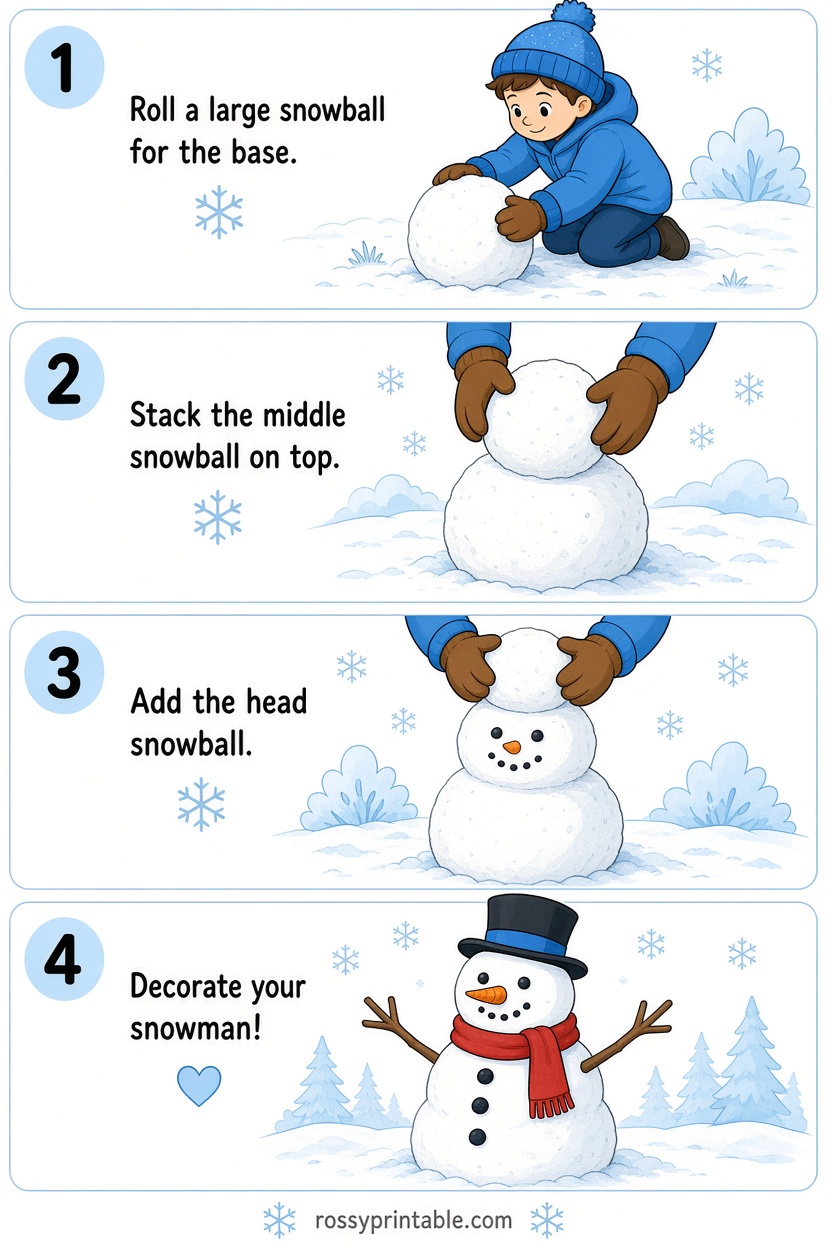
3. Make the Base (Bottom Ball)
Start with a firmly packed snowball about the size of a softball. Place it on the ground and roll it in different directions so it stays round and grows evenly. Aim for roughly 2–3 feet across. Pack the surface as you go so the ball stays solid. Move the finished base to its final location before it becomes too heavy.
4. Create the Middle Section
Make a second ball slightly smaller than the base (about 1½–2 feet). Flatten the top of the base a little so the middle section sits securely, then lift the middle ball into place. Pack a little extra snow around the joint for stability.
5. Add the Head
Form a smaller ball for the head (about 1 foot). Place it on top and pack snow at the joint again. Shape the overall figure so the three sections look balanced.
6. Decorate
Classic finishing touches include:
- Carrot for the nose
- Sticks or branches for arms
- Buttons, stones, or coal for eyes, mouth, and buttons down the front
- Scarf, hat, or mittens from household items
Work quickly in cold weather so the snow stays firm. Adult supervision is recommended when lifting heavier balls or using tools.
Free Printable Snowman Templates
When snow is scarce or you want an indoor activity, free printable templates let kids color, cut, and build paper snowmen. These resources offer legitimate free PDFs for personal or classroom use.
One excellent collection includes multiple outlines, full snowmen, and a build-your-own design with mix-and-match pieces such as hats, scarves, and buttons. Download the free printables directly from The Best Ideas for Kids:
https://www.thebestideasforkids.com/snowman-template/
Another large set offers 26 different snowman templates in various styles and sizes, including simple outlines, detailed designs, and build-your-own sheets. All are free PDF downloads sized for U.S. letter paper:
https://mondaymandala.com/snowman-templates/
Teachers and parents can also find a free snowman template printable bundle designed for classroom or home use, with large, medium, and small snowmen plus accessory sheets, available from We Are Teachers:
https://www.weareteachers.com/snowman-template-printable/
These sites provide the files at no cost for non-commercial use. Always check the individual page for any terms of use.
What Is a Snowman and How Do You Build One?
Tips for a Longer-Lasting Snowman
- Build in the shade or late in the day when temperatures stay colder.
- Pack each ball firmly and smooth the surface.
- Avoid placing the snowman where melting runoff or foot traffic will damage it.
- In warmer spells, a light spray of water that freezes overnight can create a protective ice shell (use carefully and only when safe).
Frequently Asked Questions
What kind of snow works best for a snowman?
Moist, sticky snow that packs easily. Test by squeezing a handful—if it holds a ball shape, it is good.
How big should each section be?
A common guideline is roughly 3 : 2 : 1 (base : middle : head). Exact size depends on the amount of snow and the builders’ strength.
Can you build a snowman without real snow?
Yes. Free printable templates (linked above) let you create paper versions for coloring, cutting, and pasting.
Is building a snowman safe for young children?
Yes with adult help, especially for lifting the middle and head sections and for using sticks or small objects as decorations.
A snowman is one of winter’s simplest and most joyful creations. Whether you roll real snow outdoors or print free templates for indoor crafts, the activity encourages creativity, outdoor play, and family time. Grab the free printables, wait for the right snow, and enjoy building your own.