Table of Contents
Reindeer Facts, Habitat, Diet, and Antlers – Reindeer (scientifically Rangifer tarandus) are iconic Arctic deer known for their resilience in extreme cold. In North America, wild populations are called caribou, while the term reindeer often refers to domesticated or Eurasian animals. Both are the same species. This guide covers key reindeer facts, their habitat, diet, unique antlers, and where to find free educational printables for kids and classrooms.
Key Reindeer Facts
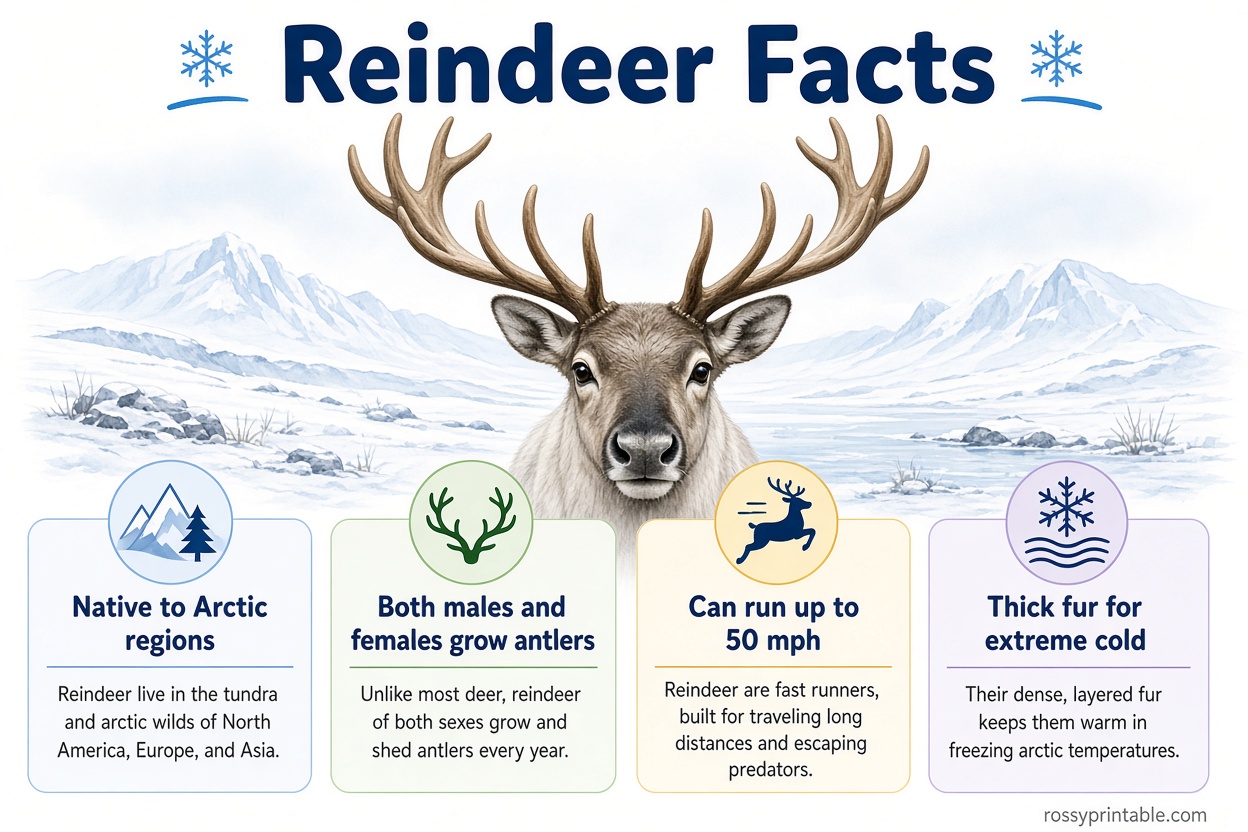
Reindeer are medium-to-large deer adapted to northern climates. Adult males typically stand 3.5–4.5 feet at the shoulder and can weigh 200–550 pounds; females are smaller. They live about 15 years in the wild.
Both males and females grow antlers—the only deer species where this occurs. Their broad, cloven hooves act like snowshoes and help dig for food. Thick, hollow-haired coats provide excellent insulation, changing from brown in summer to lighter in winter. They are strong swimmers and migrate long distances in large herds.
In the United States, wild caribou live primarily in Alaska, with some historic or managed populations farther south. Domesticated reindeer appear at farms and holiday events across the country.
Reindeer Habitat
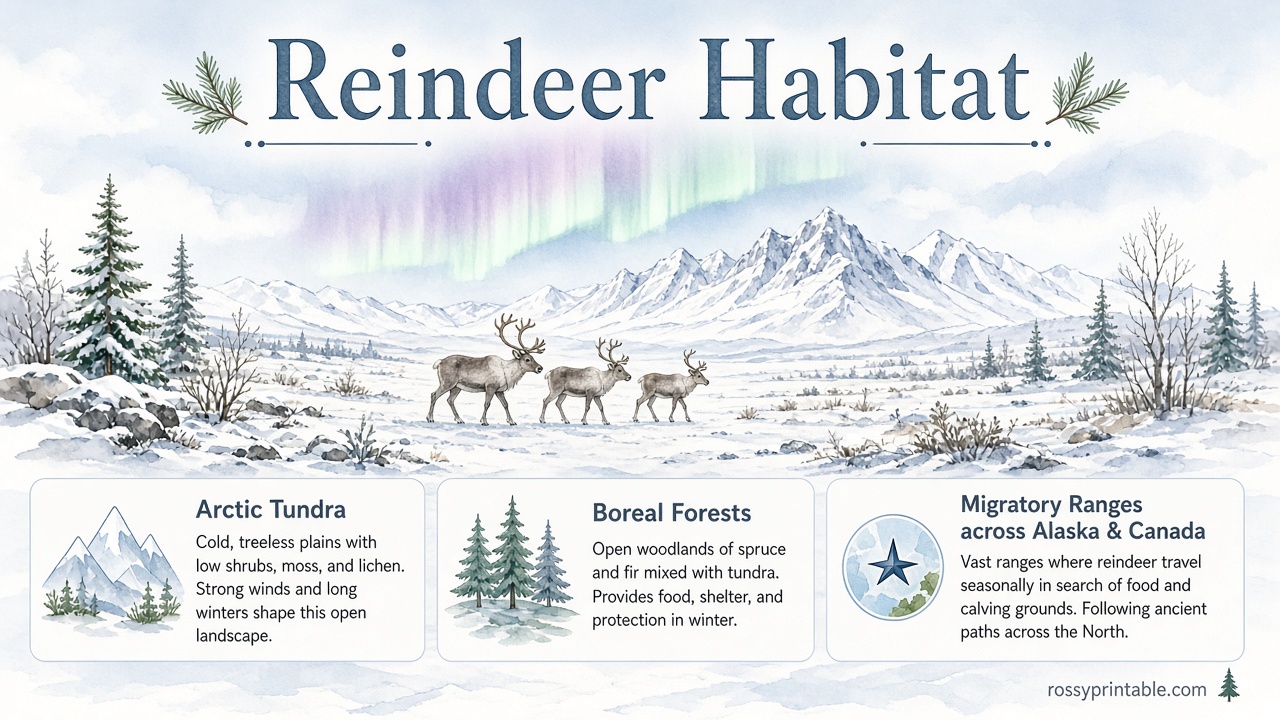
Reindeer inhabit Arctic tundra and adjacent boreal (taiga) forests across northern regions including Alaska, Canada, Greenland, Scandinavia, and Russia.
Tundra herds migrate seasonally—sometimes covering thousands of miles—between summer calving grounds on the open tundra and winter forest ranges. Forest or woodland reindeer stay in smaller groups with more limited ranges. Their habitat features long, harsh winters with deep snow and short summers rich in plant growth. Climate change and habitat disruption affect some herds, making conservation important.
Reindeer Diet
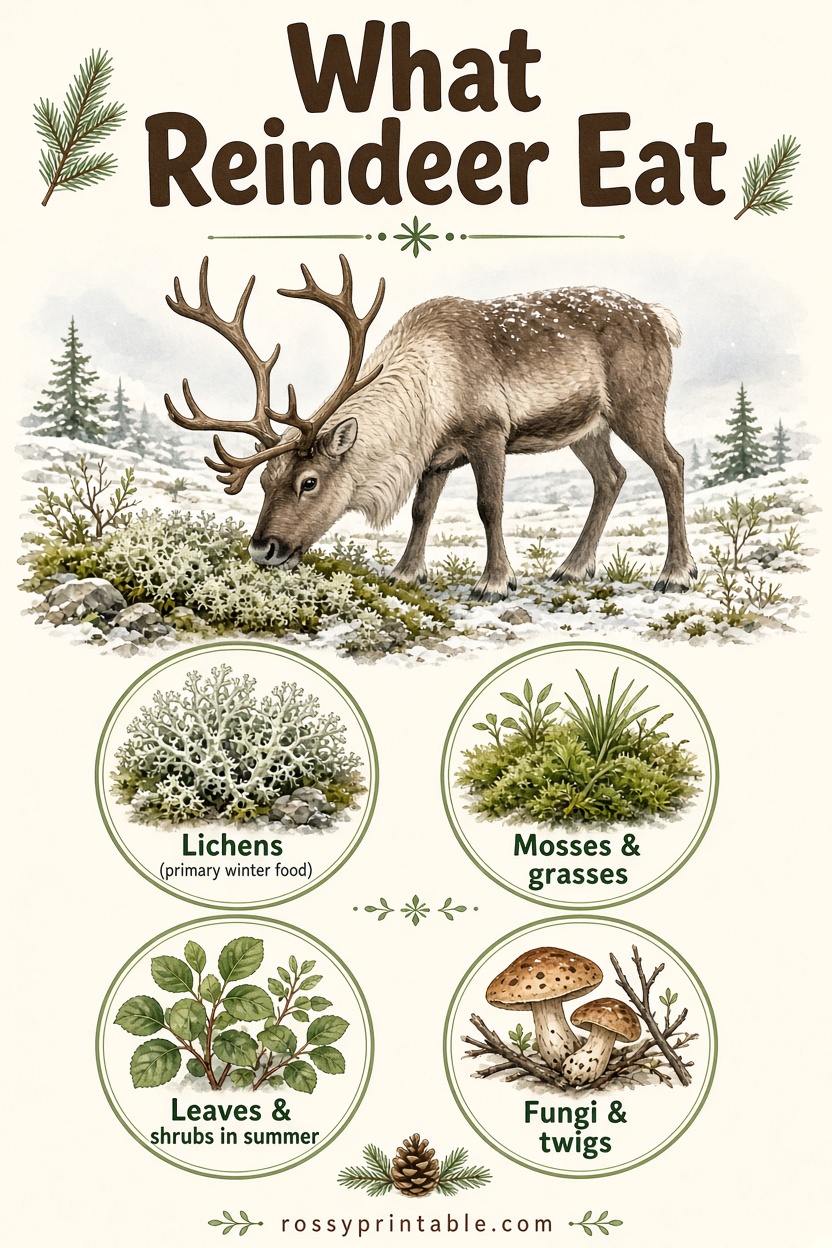
Reindeer are herbivores and ruminants. In summer they eat grasses, sedges, herbs, leaves of willow and birch, mushrooms, and other green plants. An adult may consume 9–18 pounds of vegetation daily.
In winter they rely heavily on lichens (often called reindeer moss), which they dig from under the snow using their hooves and antlers. This high-carbohydrate food helps them survive low-protein conditions. They also eat mosses, fungi, and woody browse when available. Their digestive system efficiently processes these tough foods.
Reindeer Antlers
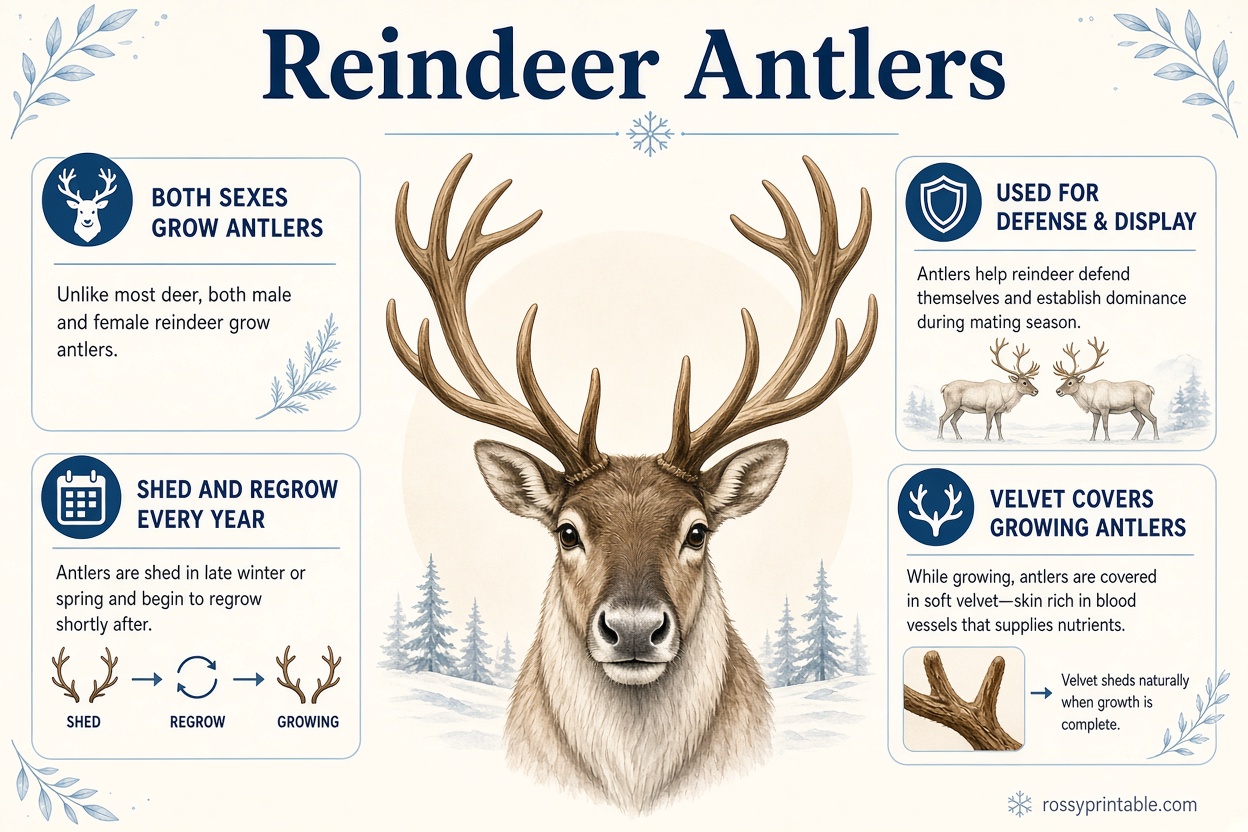
Antlers are a defining feature. Relative to body size, reindeer have some of the largest and heaviest antlers among living deer. Male antlers can reach about 51 inches long; female antlers are smaller (up to about 20 inches).
Males typically grow and shed their antlers annually after the fall breeding season (rut). Females often keep theirs through winter and shed them around calving time in spring. Females use antlers to defend feeding spots in the snow and protect calves. Growing antlers are covered in velvet rich with blood vessels; the velvet is later shed. This unique trait explains why Santa’s reindeer are often depicted with antlers in winter—many of those would be females.
Free Printable Reindeer Resources
Looking for hands-on learning materials? These free, legitimate printables work well for home, school, or holiday activities focused on reindeer facts, habitat, diet, and antlers.
Download a complete free reindeer activity set that includes facts pages, anatomy labeling, life cycle, word search, coloring page, and more: Free Printable Reindeer Activity Set (PDF) from About a Mom.
For craft templates and outlines (great for labeling antlers or body parts), visit the free printable reindeer templates collection: 24 Free Printable Reindeer Templates.
These resources help reinforce the science while keeping learning fun and printable at home.
Reindeer Facts, Habitat, Diet, and Antlers
FAQ
Are reindeer and caribou the same?
Yes. They are the same species (Rangifer tarandus). “Caribou” usually refers to wild North American populations; “reindeer” is more common for Eurasian or domesticated animals.
Do all reindeer have antlers?
Both sexes grow antlers, though size and shedding timing differ. This is unique among deer.
What do reindeer eat in winter?
Primarily lichens (reindeer moss), dug from under the snow, along with other available plants and fungi.
Where can Americans see reindeer?
Wild caribou live in Alaska. Domesticated reindeer appear at many U.S. farms, zoos, and holiday events.
Reindeer remain fascinating examples of Arctic adaptation. Whether you are studying them for school, planning a holiday activity, or simply curious, the facts above and the free printables provide a solid starting point. For deeper reading, consult trusted sources such as Britannica’s reindeer entry or the San Diego Zoo’s animal page.