Table of Contents
Free Printable Christmas Thank You Cards – Make it easy to turn a holiday gift or kind gesture into a personal note. Pick a small card for a quick message, let a child color a thank-you, or use the letter page when you have more to say. Each original sheet is sized for US Letter paper and leaves room for handwriting, so you can print only the design that suits the person you are thanking.
Free Printable Christmas Thank You Cards
Choose a design for the note you want to send
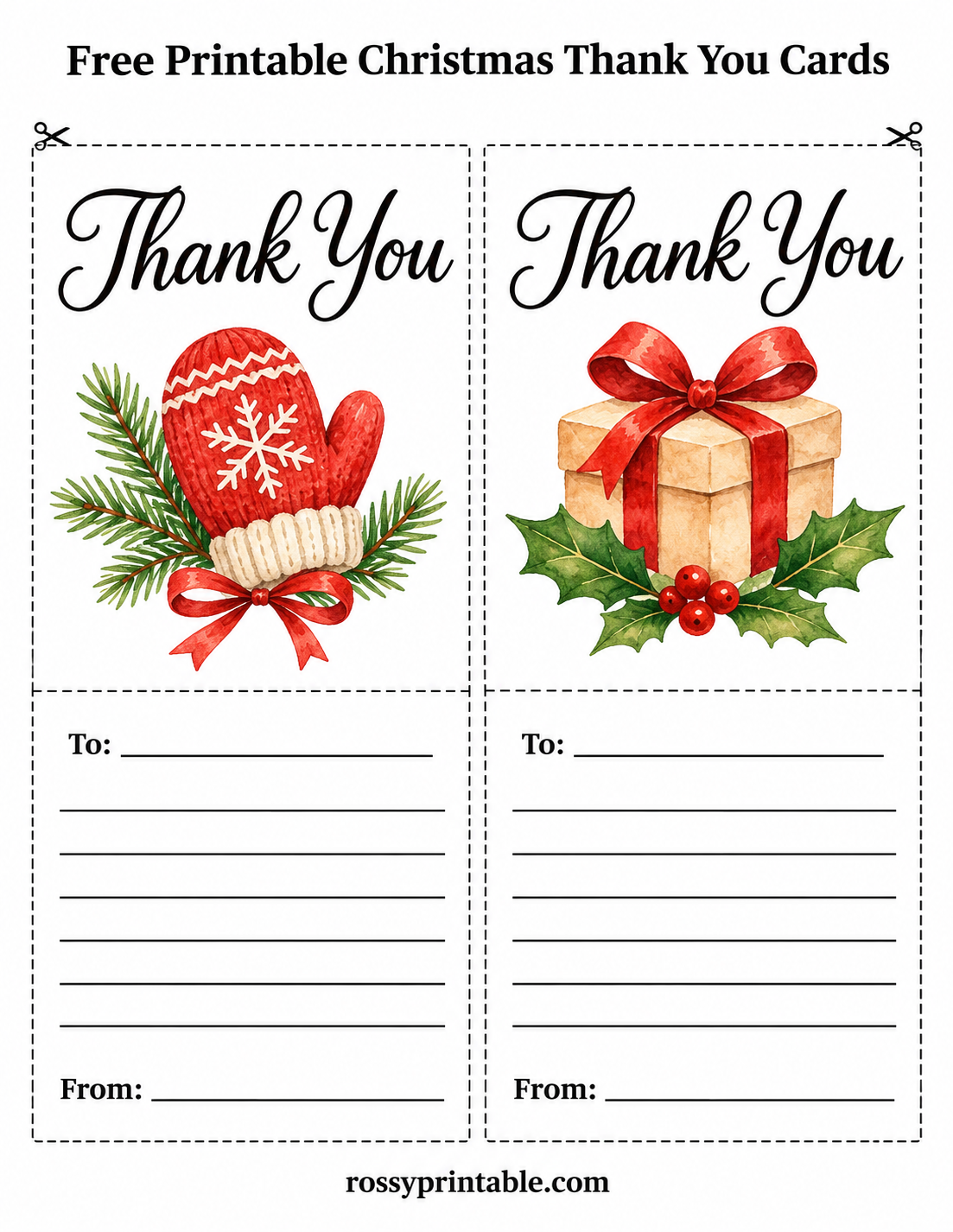
The mitten and present sheet contains two larger notes, arranged side by side. Both fronts say “Thank You” above colorful Christmas artwork. Beneath each picture are lines for a handwritten message, plus spaces marked “To” and “From.” Print one sheet when two relatives or neighbors deserve a little more than a quick greeting. Cut along the dashed outlines, keeping the recipient and sender spaces with each card.
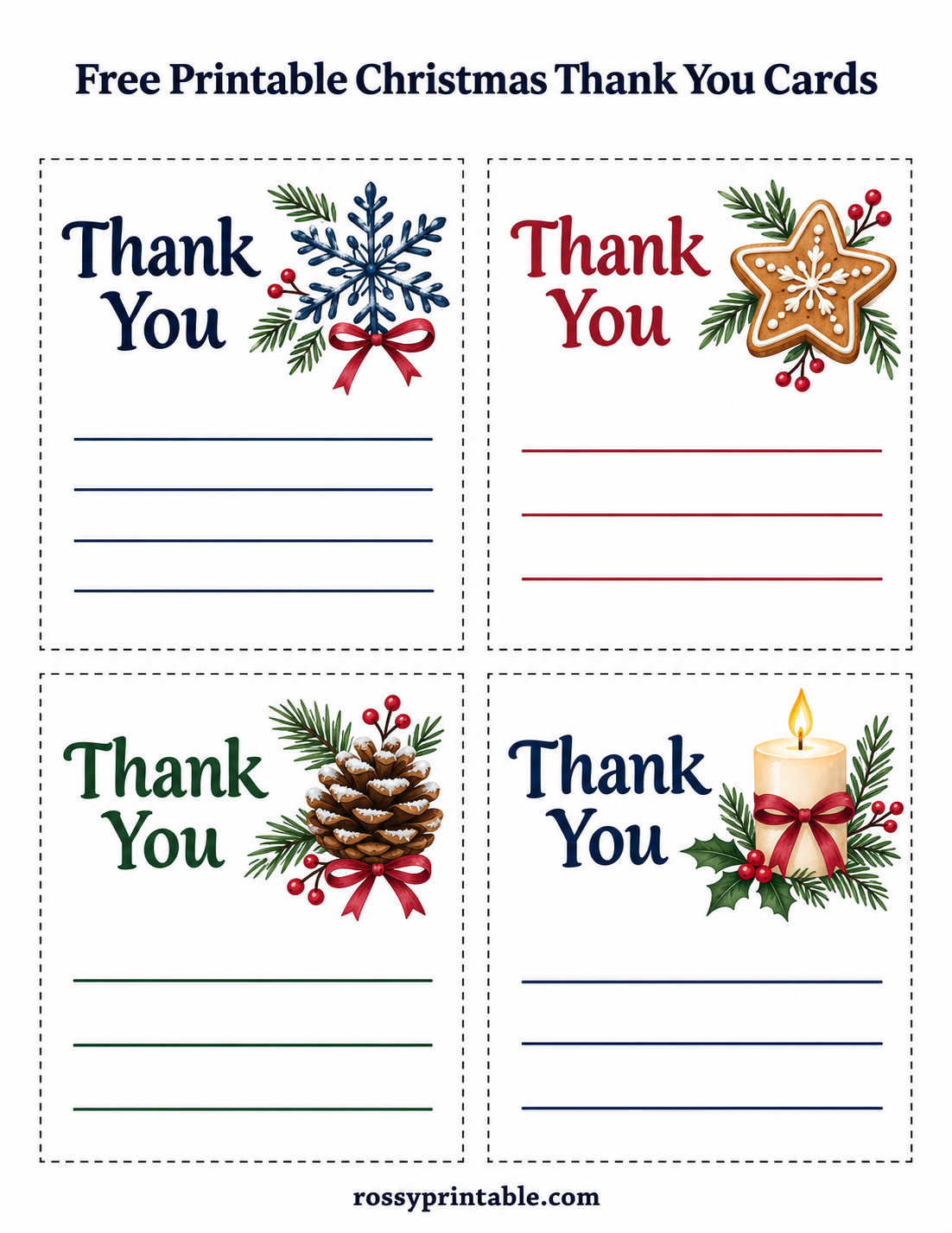
The four-card sheet is a good choice when you have a list of people to thank after a gathering. Its snowflake, gingerbread star cookie, pine cone, and candle give each card a different look, while the short writing lines make the format approachable. You could give the snowflake to a teacher, the cookie to someone who hosted you, and the remaining designs to friends. The illustrations are small enough to leave the message as the focus.
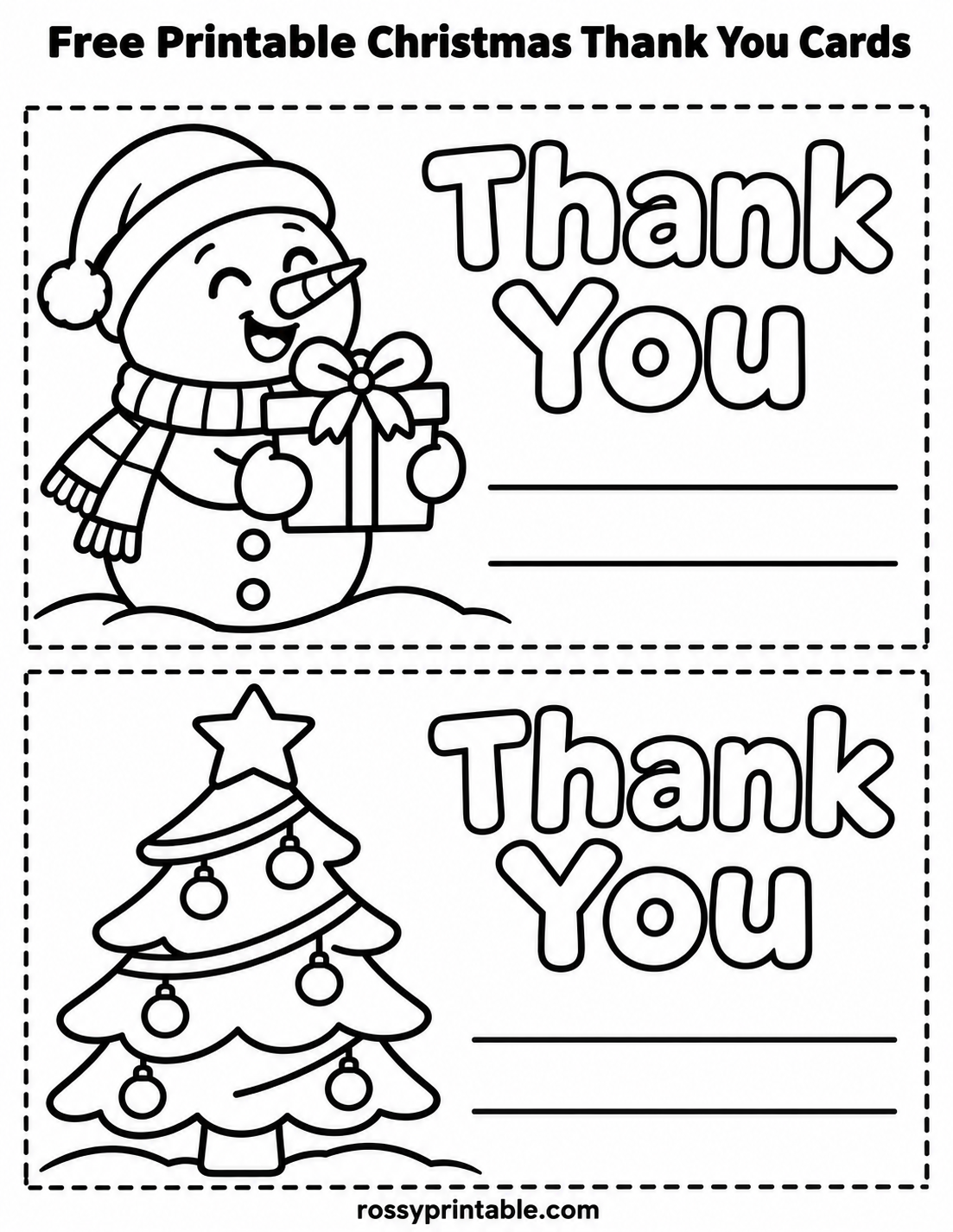
For children, choose the black-and-white coloring sheet. One card features a smiling snowman holding a present, and the other has an ornamented Christmas tree. Both have large outline “Thank You” lettering and two lines for a short note. A child can color the picture, print or dictate a sentence about a particular gift, and sign the card. It makes an activity with a useful result, especially during a quiet afternoon after Christmas.
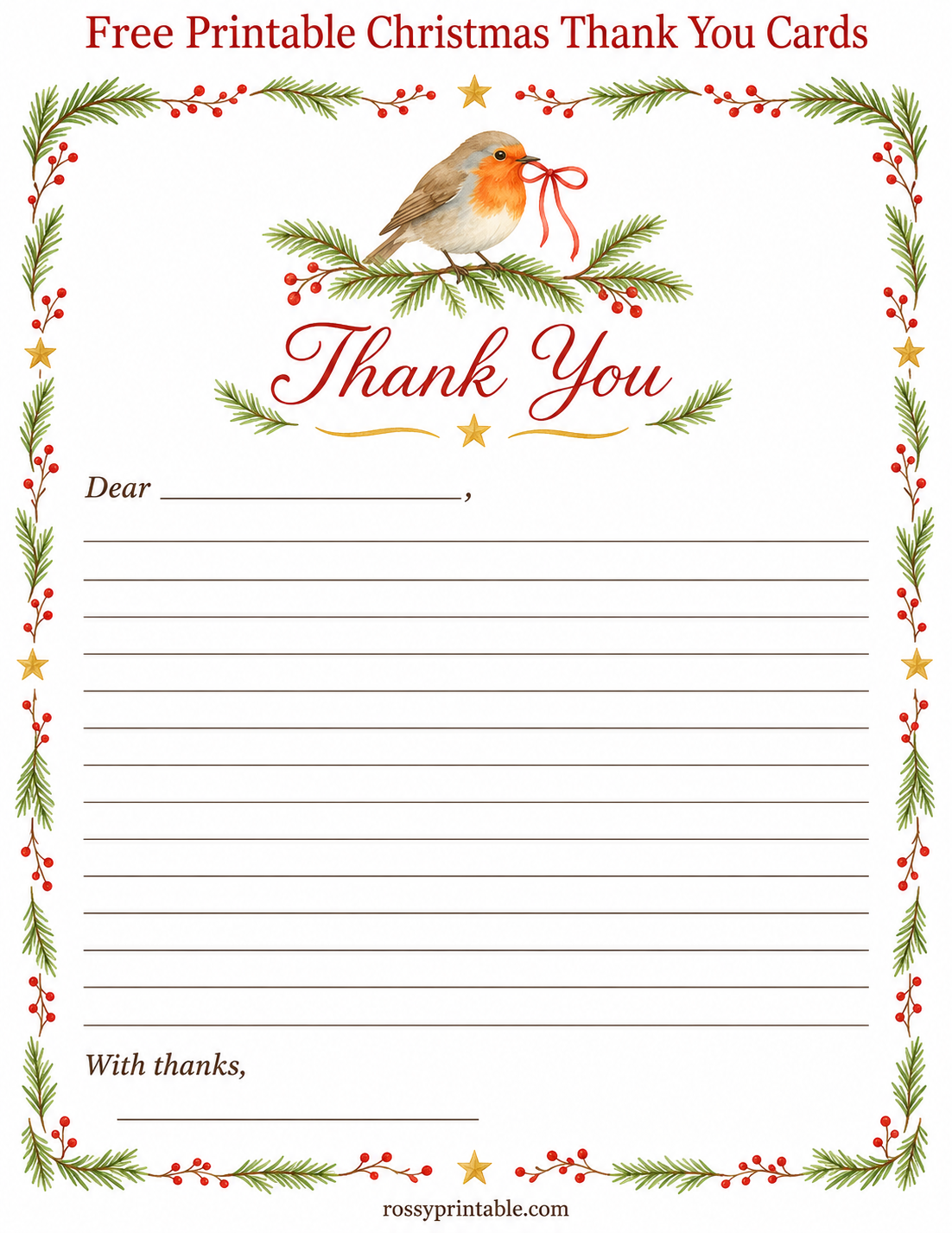
The robin design is a full-page letter sheet for a longer message. A bird on an evergreen branch sits above “Thank You,” and a light border of spruce, berries, and stars frames the writing area. The “Dear” and “With thanks” prompts help start and finish the note. Use it for a grandparent who sent a thoughtful parcel, a holiday host, or anyone whose help deserves a fuller story. Fold the finished letter to fit an envelope after writing.
How to print and prepare the cards?
Download the original WebP through the link directly below the design you want. Open the saved file in an image viewer or your browser and select US Letter, portrait orientation. Choose actual size or 100% scaling when your printer supports it. If its printable area is smaller than the sheet, choose “fit to printable area” and check the preview first so the title, cut lines, and small watermark remain on the page. Do a single test print before making several copies.
Plain white printer paper works for the coloring page and the letter sheet. For a sturdier card, try a lightweight white cardstock your printer can handle; check your printer’s paper guidelines before loading it. Let the ink dry before stacking, coloring, or trimming. The first, second, and third sheets have dashed outlines to guide cutting. A paper trimmer makes straight edges, while scissors are fine for a small number of cards. These are flat notes rather than pre-scored folding cards, so write on the printed face or add a separate blank back if desired.
If you plan to mail a cut card, measure its finished dimensions before choosing an envelope. The US Postal Service’s letter and postcard mailing guide explains addressing and size considerations. Put the recipient’s address clearly in the center of the envelope, add a return address, and check postage for heavier cardstock or an unusual shape. The full-page letter can go inside a standard envelope once folded neatly.
What to write in a Christmas thank-you note?
A good note can be brief and specific. Start with the person’s name, thank them for the gift or action, say what you enjoyed about it, and close warmly. For example: “Dear Aunt Maya, thank you for the puzzle you gave us for Christmas. We worked on it together after dinner, and everyone wanted to find the last piece. It was such a fun part of our holiday. Love, Jordan.” That says more than a general “thanks for everything” without needing a long letter.
When you are thanking a host, name one detail that made the visit special: a favorite meal, the conversation, or a tradition they shared. For a neighbor who brought cookies, mention that you enjoyed them and appreciated the visit. If a child is writing, one honest sentence and their own drawing can mean more than a polished message written entirely by an adult. Let them choose the coloring design and pick the colors before helping with the words.
If you want a more formal model, the Emily Post Institute has a downloadable holiday etiquette PDF with thank-you note tips. It suggests opening with a direct thanks for a specific gift or act, adding a personal detail, and ending with a warm closing. Use those ideas as a starting point, then write in your own voice. A handwritten note feels personal because it sounds like you.
Make a simple after-Christmas writing session
Gather the names of the people who gave gifts, hosted meals, or helped during the season. Put the four designs on the table with pens, colored pencils, envelopes, and a few stamps. Let each writer choose a page that suits their message. Adults can use the four mini cards to finish several short notes; children can decorate the snowman or tree while you talk about the person they are thanking. For someone far away, the robin letter provides room to share a favorite holiday memory.
Once the notes are written, read each one for names and specific details, then let any marker or ink dry fully. Cut only the card sheets along their dashed boundaries. Keep a small checklist of recipients so nobody is missed, and set the completed envelopes where they will actually be mailed. If a note goes out later than you hoped, send it anyway. The small effort of naming someone’s kindness is what makes a Christmas thank-you card worth opening.