Table of Contents
Veterans Day White Table Poem – The Veterans Day White Table Poem (more accurately the Missing Man Table or America’s White Table ceremony script) is a solemn military tradition that honors prisoners of war (POWs), those missing in action (MIAs), and fallen service members who cannot join the table. For a U.S. audience, this resource page explains the tradition clearly, covers its symbolism, and points you to legitimate free or official resources for printables, scripts, and educational materials.
What Is the Veterans Day White Table Poem?
The “White Table Poem” refers to the spoken explanation or ceremony script that accompanies the Missing Man Table (also called the White Table or America’s White Table). It is not a traditional rhyming poem in most versions but a dignified narrative that describes each symbolic item on a small table set for one.
Popularized for families and schools through the children’s book America’s White Table by Margot Theis Raven, the tradition appears in military dining facilities, veterans’ events, schools, and community gatherings, especially around Veterans Day (November 11) and National POW/MIA Recognition Day. The table reminds everyone that some who served never returned and that their sacrifice and the wait of their families must not be forgotten.
History of the Missing Man Table
The Missing Man Table grew out of concern for American POWs and MIAs during and after the Vietnam War. It became a formal element in military dining facilities and ceremonies. The National League of POW/MIA Families has long promoted the protocol and symbolism to keep public awareness high. Today the table appears at VA facilities, bases, VFW and American Legion posts, schools, and private homes across the United States.
Symbolism of the White Table Items
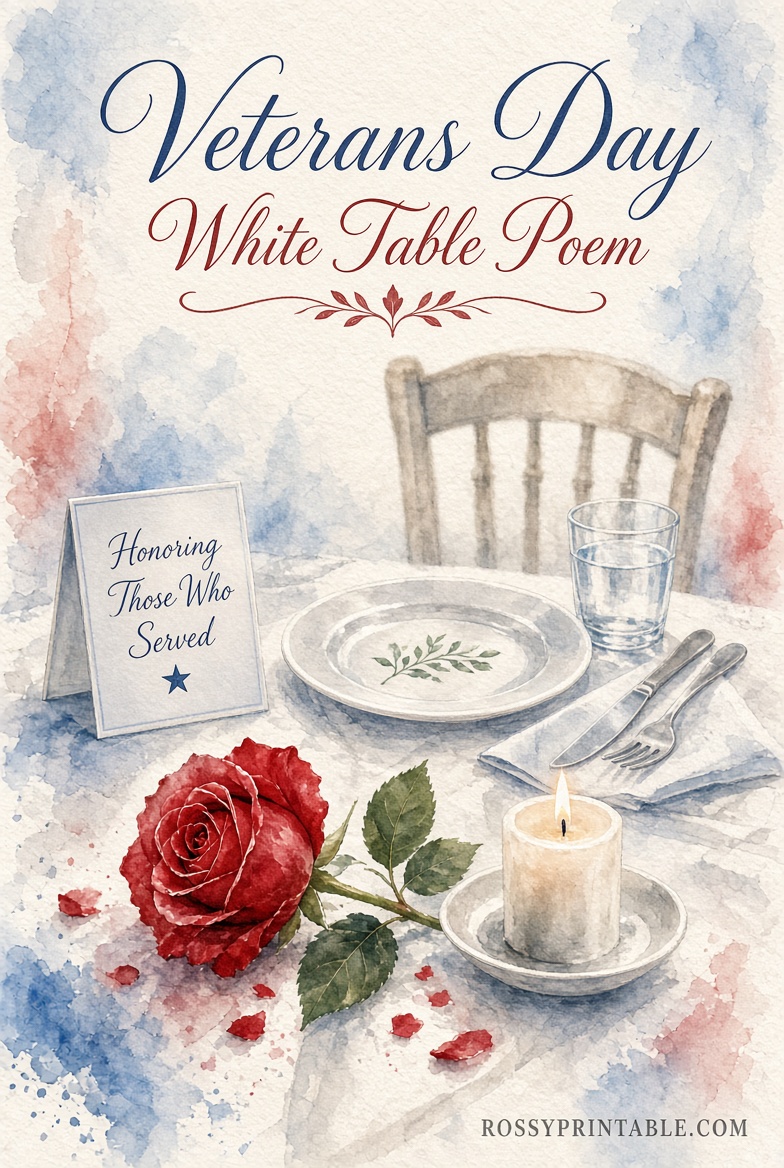
Each item on the small table carries specific meaning. Common elements include:
- Small table (often round): Frailty of one prisoner alone against many oppressors and everlasting concern.
- White tablecloth: Purity of the service member’s intentions when answering the call to duty.
- Empty chair: The missing person is not present.
- Black or dark napkin: Sorrow of captivity.
- Single red rose in a vase (often with yellow or red ribbon): Blood shed for freedom and the families and friends who keep faith while awaiting return or answers. The ribbon signals determination to account for the missing.
- Slice of lemon and grains of salt on the plate: Bitter fate of captivity and the tears of waiting families.
- Inverted glass: The missing cannot share in the meal or toast.
- White candle (sometimes lit): Hope and a beacon for return or peace.
- Optional Bible or POW/MIA flag: Faith and the broader reminder of those still unaccounted for.
These meanings appear consistently in official and veterans’ organization scripts.
Free and Official Resources for the Script and Printables
Legitimate sources prioritize official or organizational materials rather than unverified downloads. Here are authoritative options (all open in a new tab):
- The National League of POW/MIA Families provides history, protocol, symbolism details, and a downloadable Missing Man Table and Candlelight Ceremony Guide (PDF) on their page: pow-miafamilies.org/the-missing-man-table. A direct guide PDF is also available via their site.
- Military Order of the Purple Heart hosts a clear Missing Man Table & Honors Ceremony PDF script: purpleheart.org/static/MissingMan.pdf.
- For family or classroom use tied to the popular children’s book, Homeschool Share offers a free America’s White Table unit study with related printables and activities: homeschoolshare.com/americas-white-table-unit-study.
- Elva Resa Publishing shares a practical guide to setting up your own White Table (supplies list and symbolism) connected to POW/MIA education: elvaresa.com/resource/set-up-your-own-white-table.
These resources come from recognized veterans’ and educational organizations. Always verify current availability and respect any usage notes. Avoid sites that claim “free poem printables” without clear attribution, as many recycle the same public-domain-style ceremony language without official backing.
Veterans Day White Table Poem


How to Use the White Table on Veterans Day?
Schools often read America’s White Table aloud, then have students place the items while explaining each one. Families can set a small table at home or invite a veteran to share reflections. Community groups and posts commonly incorporate the full ceremony script during dinners or observances. Keep the tone respectful and focused on remembrance rather than spectacle.
Brief FAQ
Is there one official “White Table Poem”?
No single copyrighted poem exists. The widely used text is the Missing Man Table ceremony script developed and shared by the National League of POW/MIA Families and adapted by military and veterans’ groups.
Can I print the script for a school or community event?
Yes—use the free PDFs and guides from the League, Purple Heart, or similar trusted sources listed above. Attribute the tradition appropriately.
How does this differ from Memorial Day observances?
Veterans Day honors all who have served; the White Table specifically remembers those who were captured, remain missing, or never returned. Many communities use it on both occasions.
Where can I learn more about current POW/MIA accounting efforts?
Start with the National League of POW/MIA Families site linked above and official Department of Defense POW/MIA resources.
Setting a White Table—whether with the full ceremony script or a simple family version—is a meaningful way to honor service and keep the promise that those still missing are not forgotten. Use the official guides and free educational materials to do it accurately and respectfully this Veterans Day.